Categories
Newsletter

Conan’s Newsletter: No. 3

Dear readers,

I hope you’ve had a great week! Here are the recommendations for this week:
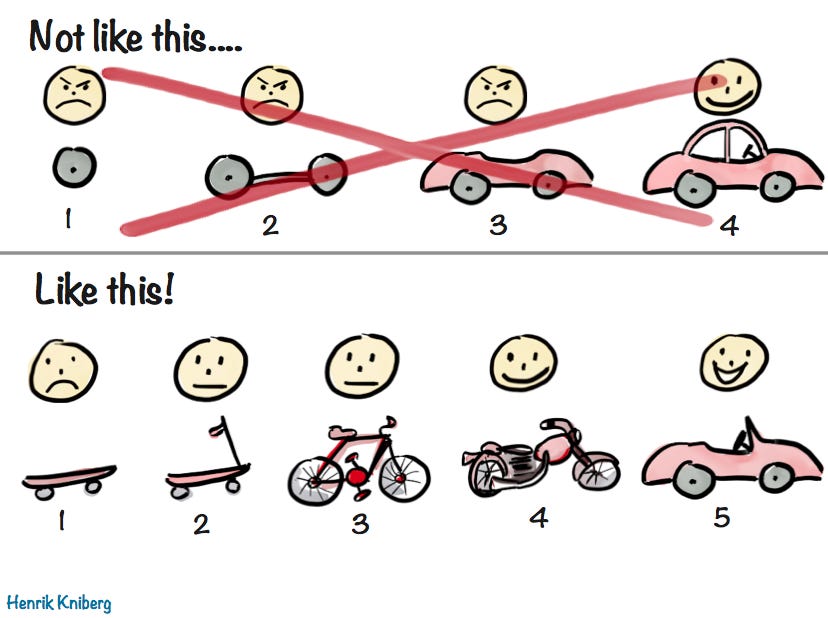
  1. Making sense of MVP (Minimum Viable Product) – and why I prefer Earliest Testable/Usable/Lovable. This great essay from Henrik Kniberg explains minimum viable product (MVP), an important concept in lean development. An MVP is a product that is released to collect customers’ feedback as early as possible for product iteration. Because the main purpose of an MVP is to learn customers’ feedback rather than to build the final product, it needs to be minimum yet COMPLETE. The figure above is a metaphor for the idea: if your goal is to build a sedan, your MVP should be a skateboard, which helps collect customer’s feedback on transportation tools, instead of a perfect tire. From the early adopters who try the skateboard, you may learn that customers want to enjoy fresh air while moving. As a result, you could build a convertible car that fits customers’ needs better than the original design.
  2. The e-commerce surge
    1. This essay from Benedict Evans gives concrete data about the surge of e-commerce during the pandemic in the UK and the US — The UK e-commerce penetration went from 20% to over 30% in two months, and the US from 17% to 22%. Prior to the pandemic, e-commerce penetration in the two counties has been increasing at a quite steady pace. However, the pandemic lockdown has pulled forward a huge amount of future adoption within a short period. It would be interesting to see how much of those adoptions would stick to.
    2. As the e-commerce boom continues,  Amazon itself has become one of the largest shipping carriers in the world and shipped 415 million packages in July alone. Besides, other US shipping carriers also saw a surge in the volume. UPS saw volume grow 26% in July compared with the average monthly growth of 23% in the April to June period. FedEx volume rose 22% compared with 19% average growth in the first three full months of the coronavirus pandemic.
  3. Many software companies are lining up for IPOs as the capital market is booming. One particular interesting thing is that the percentage of enterprise software companies is super high in this round of IPOs. In the past decades, the enterprise and consumer software industries in the US have diverged into two directions. Most of the consumer businesses like Facebook and Google build walled gardens, making it very difficult for new players to enter the market. In contrast, enterprise software companies are embracing specialization and eagerly integrating with other enterprise vendors. This makes it much easier for new enterprise startups to reach IPO stages. Besides, this review of high-growth SaaS IPOs in 2019 would give you an idea of the enterprise companies that went public in 2019. 

Funny tweets:

  1. Taylor Swift as B2B software…a thread. A hilarious tweet that shows how the Taylor Swift and Software Company CEOs have similar tastes of colors.

Other interesting facts:

  1. A flood in 1762 made the whole California central valley a lake. Another bad news is that this event happens every 100-200 years and the next event could come anytime.
Categories
Newsletter

Conan’s Newsletter: No. 2

Recommendations for this week:

  1. Highly recommend this video created by Phil Libin, the co-founder of Evernote and recently the mmhmm app, to explain the motivation behind the new app’s name. The mmhmm app has been generating a lot of buzzes recently but its name sounds ridiculous to many people. In this video, Phil describes his philosophy of the naming: A ridiculous yet interesting name is way better than a boring one. It is better to create a product that is loved by someone and hated by some others than a product that nobody cares about. Besides, mmhmm is really fun to use. If you haven’t tried it out yet, you should!
  2. The Passion Economy and the Future of Work. We are in a world that the definition of jobs has changed significantly, and the process has been accelerating since the pandemic. In the new world, individuality is respected and encouraged, and people could and should earn their living from their individuality.
  3. Defining Interactive Ecommerce – Pinduoduo [53 slides] – Recommendation driven China e-commerce”. Pinduoduo is a miracle: Imagine the chance of someone in the US builds a second Amazon in only 3-4 years, which is what Pinduoduo has done in China. This detailed report gives great insights into why Pinduoduo could make a dent in a market with a strong incumbent.
  4. An article about Steve Blank’s Customer Development Manifesto. I love Steve Blank’s opinion that “A Startup Is a Temporary Organization Designed to Search for A Repeatable and Scalable Business Model”. Can’t agree more!

Funny tweets:

  1. Impressive commit history. Hope you won’t start to count tiles next time when you take showers!

Other interesting facts:

  1. In 1901, President Theodore Roosevelt officially named the Executive Mansion the “White House” . This is much later than I thought.
  2. This is a 393-years old Greenland Shark that was located in the Arctic Ocean. It’s been wandering the ocean since 1627. It is the oldest living vertebrate known on the planet.
Categories
Newsletter

Conan’s Newsletter: No. 1

Books

  1. Startup CEO: This is a great book about startup management and is very useful for people who are first-time CEOs or aspire to be CEO one day but don’t have any experience yet.

Startup

  1. Software-as-a-Service (SaaS) startups have been following a roller-coaster this year. The SaaS companies had rapid devaluation in the face of a global pandemic, but the valuation went up significantly after it became clear that SaaS may be benefited from the pandemic
  2. Roadmap to a SaaS IPO: how to unicorn your way to $100M revenue
    1. This is a useful article on the growth trajectory of SaaS companies. One useful information from the article is the T2D3 rule. From $2M, you need triple the revenue for two years and double the revenue for three years to reach the $100M revenue mark.

Artificial Intelligence

  1. TikTok and the Sorting Hat
    1. A great article by Eugene Wei on how TikTok became a phenomenon worldwide. One interesting idea of the article is one of the key things for the success of TikTok outside China is that it used algorithms to break the cultural barrier. More and more Chinese companies were trying to follow TikTok. At the end of the article, Eugene mentioned non of the engineers in the NewsDog App, a popular news app in India, could speak the local language. 
  2. Here’s why Apple believes it’s an AI leader—and why it says critics have it all wrong
    1.  This article demystifies Apple’s AI efforts, which is least well-known among the big five (a.k.a Facebook, Amazon, Apple, Netflix, and Google or FAANG). John Giannandrea (JG), the head of AI at Apple, was the lead of Google AI before he took the job. We had a short overlap before he left and he was very popular among the AI team in Google.

Interesting Things

  1. Here is an interesting tweet from Jeff Dean about the metrics system in the US v.s rest of the world. There are only three countries in the world using the imperial metric system.
  2. A really fun tweet about another usage of excavating shovels .
  3. See Japanese Shibuya city from a first-person game view
Categories
English

What AI practitioners could learn from Tesla

This is the second blog about Tesla, please also read the blog of The Rise and Fall of a Great Inventor if you are interested to learn more about Tesla’s life.

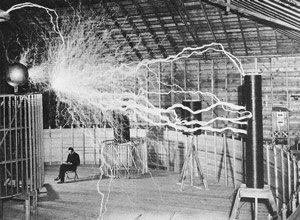
Tesla is one of the key figures in the early evolution of the electrical industry. Tesla has good showmanship and is very good at attracting public attention through jaw-dropping demos.  In one such public demo, Tesla ignited light bulbs using his body. Those demos helped Tesla raise funding for his Alternating-Current motors, which greatly extended the applications of electricity.

0_tc81proTFGVIpWqC.pngTesla’s Magnifying transmitter 

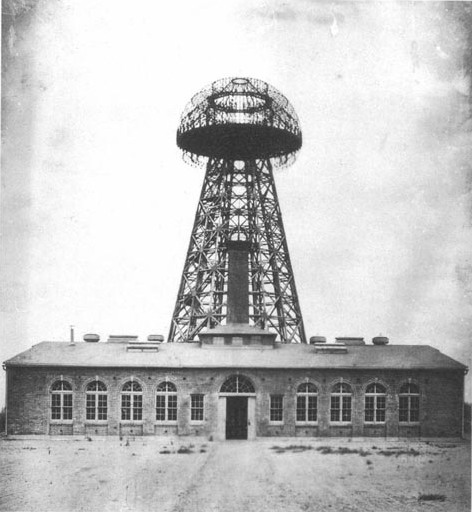
In Tesla’s later years, his focus shifted to wireless energy transmission. Tesla planned to set up a set of energy transmission towers in the world, and any person could receive energy through a hand-held device. It was a grand project. Tesla raised some initial funding from J.P. Morgan to implement a prototype. Unfortunately, an Italian physicist and radio pioneer Marconi finished the wireless telegraph across the Atlantic Ocean in 1901, which attracted most of the public attention and overshadowed Tesla’s work. What’s worse, Tesla spent all the funding to build a huge tower in Wardenclyffe but failed to deliver a workable solution. He was turned down when trying to request more funding from J.P. Morgan. He was never able to fulfill this dream for the rest of his life.

0_5ASkdPah11dXRjfb

1904 Image of Wardenclyffe Tower.

Although it happened one century ago, Tesla’s story is still very relevant in the contemporary world in which AI is the new electricity. As an AI practitioner, I think there are several lessons we could learn from Tesla’s experience.

First, even for a super ambitious project, it is still important to make sure there are reasonable deliverables in the process. An ambitious vision may be crucial to get the initial resources. But in order to keep the marathon running, it is always good to plan a sequence of deliverables throughout the journey. The anti-pattern of promising too much while delivering too little needs to be avoided. Tesla was a visionary Inventor, but he lacked the practical mindset to manage the expectation of investors and showing deliverables.

Second, it is super important to be mindful of the relevant opportunities and be flexible for the plan. The development of technology is never a linear process. Tesla’s technology was very similar to what Marconi used for telegraph across the Atlantic and Tesla had much more experience than Marconi. Why didn’t he become the inventor of the telegraph? He failed to realize another important application of his technology — information transmission — and went straight to the grand goal of wireless energy transmission. Had he realize that achieving wireless communication was equally important and may be helpful for his final goal, he probably would invest more in the direction. 

For AI, the 2016 game between AlphaGo and Lee Sedol played a similar role as Tesla’s public demonstrations. The game attracted huge public attention and made many people realize the potential of AI. Under this hype, a lot of companies were founded with super ambitious goals that require decades to fulfill. And a lot of investors invested without a good understanding of this. What’s worse, a lot of the companies didn’t set up reasonable deliverables in a typical cycle of an investment fund. When those investors realized this gap, they may pull back investments, which will make the industry enter another winter.

It doesn’t mean that we shouldn’t work on moonshot AI projects. On the one hand, a lot of advanced AI projects will and should take place in universities under public support. On the other hand, for AI moonshots that are done in companies, we need to balance the grand vision with concrete milestones that are associated with the company’s core business. For example, one of the fields that AI works very well so far is the recommender system (e.g. the algorithm behind and Youtube or Instagram Feeds). The main reason for this is that its deliverables are very quantifiable (e.g., improve the daily activities users by x percentage) and directly contribute to the core business of the company, which is crucial to ensure continual support. I hope other fields could also find a similar positive feedback loop. It won’t be an easy path, but it is something that industrial AI  practitioners need to figure out.