Categories
Newsletter

Conan’s Newsletter: No. 1

Books

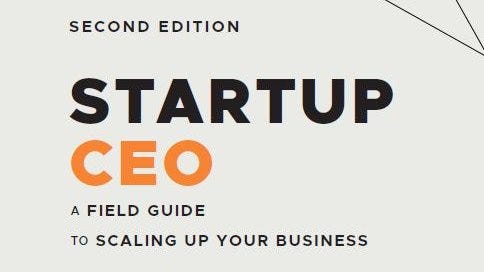
  1. Startup CEO: This is a great book about startup management and is very useful for people who are first-time CEOs or aspire to be CEO one day but don’t have any experience yet.

Startup

  1. Software-as-a-Service (SaaS) startups have been following a roller-coaster this year. The SaaS companies had rapid devaluation in the face of a global pandemic, but the valuation went up significantly after it became clear that SaaS may be benefited from the pandemic
  2. Roadmap to a SaaS IPO: how to unicorn your way to $100M revenue
    1. This is a useful article on the growth trajectory of SaaS companies. One useful information from the article is the T2D3 rule. From $2M, you need triple the revenue for two years and double the revenue for three years to reach the $100M revenue mark.

Artificial Intelligence

  1. TikTok and the Sorting Hat
    1. A great article by Eugene Wei on how TikTok became a phenomenon worldwide. One interesting idea of the article is one of the key things for the success of TikTok outside China is that it used algorithms to break the cultural barrier. More and more Chinese companies were trying to follow TikTok. At the end of the article, Eugene mentioned non of the engineers in the NewsDog App, a popular news app in India, could speak the local language. 
  2. Here’s why Apple believes it’s an AI leader—and why it says critics have it all wrong
    1.  This article demystifies Apple’s AI efforts, which is least well-known among the big five (a.k.a Facebook, Amazon, Apple, Netflix, and Google or FAANG). John Giannandrea (JG), the head of AI at Apple, was the lead of Google AI before he took the job. We had a short overlap before he left and he was very popular among the AI team in Google.

Interesting Things

  1. Here is an interesting tweet from Jeff Dean about the metrics system in the US v.s rest of the world. There are only three countries in the world using the imperial metric system.
  2. A really fun tweet about another usage of excavating shovels .
  3. See Japanese Shibuya city from a first-person game view
Categories
English

What AI practitioners could learn from Tesla

This is the second blog about Tesla, please also read the blog of The Rise and Fall of a Great Inventor if you are interested to learn more about Tesla’s life.

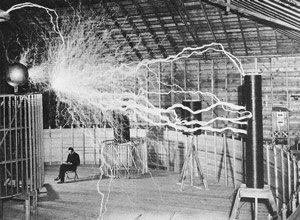
Tesla is one of the key figures in the early evolution of the electrical industry. Tesla has good showmanship and is very good at attracting public attention through jaw-dropping demos.  In one such public demo, Tesla ignited light bulbs using his body. Those demos helped Tesla raise funding for his Alternating-Current motors, which greatly extended the applications of electricity.

0_tc81proTFGVIpWqC.pngTesla’s Magnifying transmitter 

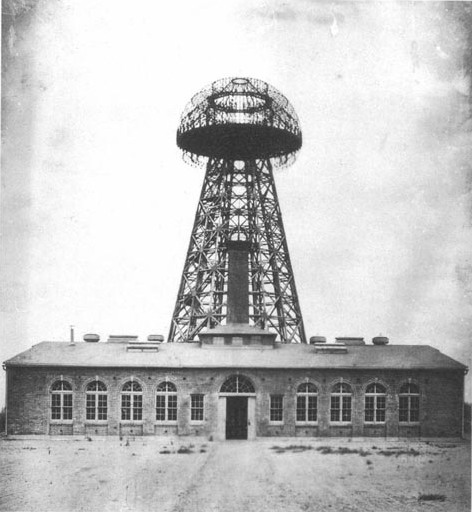
In Tesla’s later years, his focus shifted to wireless energy transmission. Tesla planned to set up a set of energy transmission towers in the world, and any person could receive energy through a hand-held device. It was a grand project. Tesla raised some initial funding from J.P. Morgan to implement a prototype. Unfortunately, an Italian physicist and radio pioneer Marconi finished the wireless telegraph across the Atlantic Ocean in 1901, which attracted most of the public attention and overshadowed Tesla’s work. What’s worse, Tesla spent all the funding to build a huge tower in Wardenclyffe but failed to deliver a workable solution. He was turned down when trying to request more funding from J.P. Morgan. He was never able to fulfill this dream for the rest of his life.

0_5ASkdPah11dXRjfb

1904 Image of Wardenclyffe Tower.

Although it happened one century ago, Tesla’s story is still very relevant in the contemporary world in which AI is the new electricity. As an AI practitioner, I think there are several lessons we could learn from Tesla’s experience.

First, even for a super ambitious project, it is still important to make sure there are reasonable deliverables in the process. An ambitious vision may be crucial to get the initial resources. But in order to keep the marathon running, it is always good to plan a sequence of deliverables throughout the journey. The anti-pattern of promising too much while delivering too little needs to be avoided. Tesla was a visionary Inventor, but he lacked the practical mindset to manage the expectation of investors and showing deliverables.

Second, it is super important to be mindful of the relevant opportunities and be flexible for the plan. The development of technology is never a linear process. Tesla’s technology was very similar to what Marconi used for telegraph across the Atlantic and Tesla had much more experience than Marconi. Why didn’t he become the inventor of the telegraph? He failed to realize another important application of his technology — information transmission — and went straight to the grand goal of wireless energy transmission. Had he realize that achieving wireless communication was equally important and may be helpful for his final goal, he probably would invest more in the direction. 

For AI, the 2016 game between AlphaGo and Lee Sedol played a similar role as Tesla’s public demonstrations. The game attracted huge public attention and made many people realize the potential of AI. Under this hype, a lot of companies were founded with super ambitious goals that require decades to fulfill. And a lot of investors invested without a good understanding of this. What’s worse, a lot of the companies didn’t set up reasonable deliverables in a typical cycle of an investment fund. When those investors realized this gap, they may pull back investments, which will make the industry enter another winter.

It doesn’t mean that we shouldn’t work on moonshot AI projects. On the one hand, a lot of advanced AI projects will and should take place in universities under public support. On the other hand, for AI moonshots that are done in companies, we need to balance the grand vision with concrete milestones that are associated with the company’s core business. For example, one of the fields that AI works very well so far is the recommender system (e.g. the algorithm behind and Youtube or Instagram Feeds). The main reason for this is that its deliverables are very quantifiable (e.g., improve the daily activities users by x percentage) and directly contribute to the core business of the company, which is crucial to ensure continual support. I hope other fields could also find a similar positive feedback loop. It won’t be an easy path, but it is something that industrial AI  practitioners need to figure out.

Categories
English

The Rise and Fall of a Great Inventor

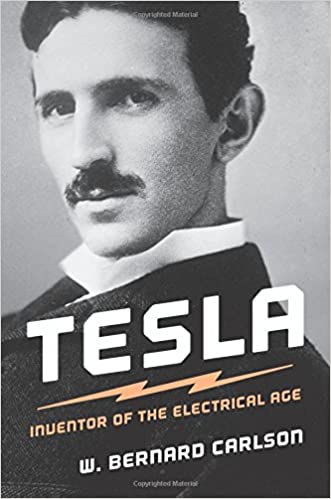
Recently I finished the book “Tesla: Inventor of Electrical Age” by W. Bernard Carlson and I highly recommend this book. I will write multiple blogs about the book and this first one will focus on historical facts and my thoughts on the rise and fall of Tesla.
tesla.jpg

Nikola Tesla was born in 1856 in the Austra-Hungarian empire. He came to the US in June 1884 to work for Edison Machine Works and left the company after a short-stay of 6 months. Later, he was approached by businessmen Benjamin A. Vail and Robert Lane to form a company but the two persons abandoned Telsa after a year. In the fall of 1886, Tesla was rescued by two other business partners Peck and Brown, who underwrote Tesla’s efforts to develop inventions into practical devices. On July 7, 1888, Peck and Brown sold the Tesla patents to Westinghouse for a lucrative deal and Tesla started to serve as a consultant for Westinghouse. Tesla left Westinghouse in August 1889 and in 1891 Westington tore apart the contract with Tesla under the pressure of investors. From 1892, Tesla started to give consultation on the Niagara fall powerhouse project, which finished in 1895 and established Tesla’s reputation as one of America’s leading inventors.

During 1895 and 1898, Tesla investigated some other things, like X-ray and radio-controlled boats. In 1899 and 1900, Tesla stayed in Colorado to perfect the wireless transmission system. In Nov 1900, Tesla was able to meet with the most powerful man on Wall Street, J.P. Morgan, and convinced Morgan to loan him $150,000 to support his wireless network. Around the same time, the Italian inventor Marconi was also working on a competing technology. In Dec 1901, Marconi finished the transmission of Telegraphy through Atlantic. The loss of the competition with Marconi forced Tesla to bet all-in on an even bolder project of wireless transmission of power. After the project failed in 1905, the life of Tesla as a bold inventor came as an end. Tesla spent most of this remaining life as a recluse in a New York hotel and was forgotten soon.

Telsa’s inventor career could be divided into three stages: Rise, Plateau, and Downfall stages. The first phase (Rise) is from when Tesla started to work for the Edison company and ended at the time when his sponsor Peck died. In this stage, Tesla, as a young immigrant, challenged the industry with his innovative thoughts of AC transmission. Tesla built his reputation by showing many magical demonstrations of electricity. Despite the dramatic promotion, Tesla’s work at this stage was pretty practical.

After Peck’s death that marked the start of the second stage (plateau), Tesla struggled to create a project that had commercial potential. Different from the first stage, Tesla at this time had more resources and still did a lot of amazing demonstrations to the public. However, a lot of his efforts like X-ray and Radio-controlled boats went nowhere. The biggest achievement this time is Niagara fall. However, Tesla’s role in the project is only a consultant and this is more a continuation of his work in the first stage. The lack of evidence to bring his innovative ideas to concrete commercial success restricted his ability to find patrons. 

The third stage is when Tesla got into the building the wireless energy transmission. He was able to secure some funding from patrons (like Astron and JP morgan) to pursue his dream thanks to his fame. However, none of his patrons at this stage was as serious and devoted as Peck and Brown were. To make matter worse, Tesla had to make bolder and bolder claims because he couldn’t catch up with new innovators like Marconi. The claims he made (like establishing a global wireless energy network) eventually backfired and cost him the credibility that was essential for him to raise funding.

Like everything in this world, the rise and the fall of Tesla are likely to be caused by many factors. I want to mention two of them in this blog:

A fundamental reason is that Tesla changed from a challenger to be a defender.  The rise of Tesla is because of his great contribution to Alternating Current (AC) technology. When Tesla first came to the US, Direct Current (DC) was more popular because it had a headstart in both research and industry. Notably, Edison was an ardent supporter of DC. However, AC had technical advantages over DC for long-distance transmission of electricity. Edison probably also realized the potential of AC. However, as the stakeholder of the Edison electric company (later became GE), which had already invested heavily in DC, Edison had to defend his commercial interests. In contrast, As a penniless immigrant, Tesla had no such burden so he chose to focus on the less-popular AC technology. In addition, like Steve Jobs, Tesla had the ability to create a Reality distortion field around him and to change people’s views. For example, Peck and Brown initially wanted Tesla to focus on DC that already had a market. Tesla organized a dramatic demonstration of using AC to make a copper egg spin by themselves that turned Peck and Brown into ardent supporters of AC. Through those demonstrations and continuous improvement of the technology, Tesla successfully challenged the status of DC.

The situation became completely different when Tesla was competing with Marconi for wireless technology. Similar to Edison in the 1980s, Tesla has been blinded by the sunk cost. Tesla’s long-term success in using electricity as a medium of energy transmission made him unable to realize the significance of wireless communication. Although he did propose a plan of using his technology for information transmission, it was mostly a strategy to secure funding and energy was still the main focus. Eventually, Tesla failed in the competition because of the complexity of wireless energy transmission. The newcomer Marconi didn’t have this burden and set wireless communication as the primary focus from day one. 

Another reason is that Tesla couldn’t find another strong business partner to fill the gap after Peck’s death. It was Peck who helped Tesla set up the strategy of patent-promote-sell that Tesla used throughout his career. However, the recipe wouldn’t work without any of the three ingredients. Tesla is very good at innovating and patenting. However, Tesla lacks the business acumen to execute the promotion and sales strategies.

Undoubtedly Tesla has a great talent for showmanship. However, the key to promotion in this context is to establish credibility among the professionals and managers in the electrical industry, who are the decision-makers for Tesla’s patents. Peck knew it very well so he tried to secure the endorsement of Professor Anthony, a well-established figure in the community, as the first step of the promotion campaign. After Peck passed away, Tesla relied mostly on mass media, which eventually portrayed him as a magician instead of a serious inventor. The mass media coverage helped Tesla in the beginning but eventually backfired and made him harder to secure financial support. Tesla also lacked sales and negotiation skills. For example, Peck helped Tesla negotiate the deal with Westinghouse, which was very favorable to Tesla himself, but Tesla allowed Westinghouse to tear it apart in 1891 after Peck passed away. Later, Tesla negotiated a very unfavorable deal with J.P. Morgan, which allowed Morgan to take the majority stake without a clear clarification of Morgan’s duty in the partnership. The ambiguity eventually damaged the partnership and the deal became a blocking stone when Tesla tried to raise funding from other investors.

Despite the enormous legacy he has left us, Tesla was forgotten for a long time. It was only in recent years that he re-entered people’s attention thanks to the electric car brand named after him. Interestingly, the founder of Tesla Motors, Elon Musk, shares a lot of characteristics with Tesla. Both are bold innovators and are good at showmanship. As a great disruptive innovator, Tesla and his story are still relevant in our contemporary world. 

Categories
English

Why we need to fight unitedly and what we should learn from Wuhan

I know it is hard to be spared from covid19 news but please pardon me for another one. The virus, now officially declared as a global pandemic, has turned the world upside down in the past months. More than 200K people have been infected and 10K people have died, with the number drastically increasing day by day. It is a pity that the containment of the virus has failed in the western world, but we should still keep our chin up and fight unitedly to mitigate the consequences. As a person who grew up in Hubei, studied in Wuhan for college and now lives in the US, I have some words to share.


First, we should take this virus extremely seriously because people (both young and old) do die from it. There have been a lot of great articles about why social distancing is critical. The next couple of weeks would be critical for mitigating the consequence of the virus. Without strong measures, the number of infections increases by 10x every 8 days. What this means is that by April 19, there will be 90M infections in the US alone if no strong measure is taken. Please also refer to this great article for more information.


Second, we need to be strategical and to learn from past lessons. In particular, I want to share what happened in Wuhan in the early days of the outbreak. As the first location of the outbreak, Wuhan suffered a lot, but it looks like the western world has very little knowledge of the mistakes that were made in Wuhan. Here are some pieces of advice based on what I know:


  1. Keep calm. Don’t rush to hospitals. Stay away from panic groups. Use tele-diagnostics options if possible. In the early days of the Wuhan outbreak, a lot of people who got common code rushed to hospital but the waiting hours could be extremely long because the hospital system was crowded. Many people got infected in the tiring waiting process during which their immune system was impaired. Hospitals need to provide an appointment system to minimize the number of people who go to hospitals at the same time. People who have symptoms should trust the system and don’t panic.
  2. Staying at home is not sufficient, you need also protect your families, especially if you have any symptoms. The very first measure of Wuhan city government was to advise people to self-isolate at home. What happened after that? The situation got much worse because people who stayed at home infected their families. When young kids or old people got infected, then people had to visit hospitals in person, which transmitted the virus to other families. If you have symptoms, please distance yourself with your families and do whatever you can to minimize interaction with them. There would be some inconveniences but it would be life-saving. The government needs to take strong actions to provide shelters for people who have symptoms for isolation. People who have been in contact with infected persons or have symptoms should go to the shelters instead of staying at home. Extended testing needs to be made to guide who should stay at home and who should go to the shelter.
  3. Don’t think that only old people get the virus and young people don’t have responsibilities. A common misconception is that young people won’t get serious symptoms from the virus so won’t be in trouble. If the hospital is crowded, nobody could be spared. Besides, young people do die from the disease. Widespread of the virus also makes it more likely for older people to get infected and the virus may also mutate in the process.
  4. Most importantly, be gentle, nice and supportive to other people. I know this is a difficult time and a lot of people are frustrated, confused and panicked. However, as a human community, we shouldn’t point guns to each other during this difficult time. Certain government officials want to take advantage of the situation and promote their political agenda. This is NOT a time for that.


I want to end the article with a positive note. With a strong measure, we could reverse the course of the virus spread. Yesterday Wuhan has reported 0 new case. Wuhan people have achieved it with 2 months of efforts, so every country and community should be able to do the same. The critical thing is to stay united and learn from each other.


God bless every human in the world!


Categories
English

A Better Future for Everyone

I recently finished the book the war on normal people written by Andrew Yang, who is a democratic presidential candidate for the 2020 election. The normal people in the title refers to the silent majority of Americans who haven’t received higher education and have suffered in the recent technological development and globalization. As a “techie” who lives in Silicon Valley, I am very thankful for Andrew to share his thoughts and opinions. This book is a great way for people like me to have a realistic view of America, a view Andrew developed after he worked many years to foster entrepreneurship outside Silicon Valley.

My first question when I saw the title was: Aren’t we living in a peaceful time? Who is waging the war to normal people? According to Andrew, we are in a “war” created by the nature of capitalism to achieve efficiency and the new technology that favors high-skilled workers at the cost of the normal people. Andrew feels that normal people lack the ability to stand on their own foot in this “war.” As a result, the government needs to step in and to give normal people a hand. The solution Andrew proposed is the  the universal basic income (or so-called freedom dividend), which is to give $1000 to every American citizen. While there may be a better solution, Andrew has got the problem right — there is a massive job shift in terms of both skill requirements and locations. Unfortunately, not everyone could adapt to the shift. 

More than 5 million manufacturing workers lost their jobs after 2000, and it was the emotion behind this massive job loss that sent Trump to the white house in the 2016 election. In the first part of the book, Andrew focuses on where and why the jobs have gone. There are two reasons for the job loss — automation and globalization. The former allows employers to replace a lot of human workers with machines, the latter allows employers to outsource many jobs to countries of lower labor costs. The American workers now need to compete with both machines and cheap labors overseas.

The underlying driving force is the desire for companies to maximize profit for shareholders. In spite of Andrew’s grudges, I think private companies should not be scrutinized for this. After all, it is the same force that propels the machine of the market to operate and it is the government’s duty to set the rules of the market and private companies are not and should not be wealth fare programs.

Another point mentioned in the book is that fewer jobs are created by the new technology than those that were eliminated. The example it cites is that while Walmart employes over +1 million works, new tech giants like Google or Facebook employes a much fewer number of people to reach the same scale. Although arguably this is true, the point is less clear if we consider the total number of job opportunities they provide. Google or Facebook are also platform companies that enabled many more job opportunities. If you count contractors, gig-workers and content creators, the number of job opportunities created by these platforms is much larger than the number of full-time employees they hire. Besides, more than 4 million enterprises rely on Google and Facebook and they provide many more job opportunities. 

Although the total number may not change, there are still significant changes in jobs. On the one hand, new jobs require much higher skills than the ones they replace. On the other hand, New jobs appear in different geographical locations than the old ones.

While globalization and automation are shifting the nature of jobs, there is no mechanism to help people, especially less educated people, to adapt to the shift. Two decades have passed since the job losses started. As two decades is a long time and if the adaption still doesn’t happen, we couldn’t expect the trend will automatically be reversed. The losers are deprived of their representative rights in the market. They will eventually stop looking for job opportunities. 

It is right that the government needs to step in to help bridge the gaps. However, instead of distributing money unconditionally, the government should give stronger incentives and guidance for people to adapt to the change.

First, the government should invest in education and ensure it is affordable and accessible. Since new jobs generally require higher skills. Equal education is the key to ensure every person has equal access to the new opportunities created by technologies. STEM education in the US is considerably lagging. Student debt is a serious issue. The quality gap of education in public and private schools needs to be narrowed. Also, adult education should be subsidized by the government because, arguably, adults who decide to continue education need more incentives and encouragement than kids. 

Second, the government should help bridge the gap among different geographical areas. Currently residing in a place outside Silicon Valley and New York means a huge loss of job opportunities. When I graduated, I couldn’t find a good job in Boston so had to come to Silicon Valley. Most of my friends had similar experiences. Given that Boston is already a talent hub and a college city, the situations of other cities could only be worse. For this issue, I recommend another book The New Geography Of Jobs, which is authored by Enrico Moretti and also discusses the geographical shift of jobs in the united states. 

One joke is that why silicon valley becomes the tech hub is that VCs like the good weather of the area. Although this is a joke, it is certainly true that VCs have a preference for certain places over others. If VC lacks the incentives to go to other cities, the government should step in and either provide venture fundings or adjust the legislation to give VC more incentives to invest in other communities. 

At the same time, for those who want to relocate to a technological hub, the government should also provide the necessary help. This is tricky because we need to make sure this won’t cause too much pressure to the communities outside the existing technical hub. 

Although I don’t agree with the plan of giving freedom dividends unconditionally, I do think the government should play a more active and positive role to create a better future for every person in the upcoming new technological society. I am glad to hear that Andrew is on the way to find a solution and his campaign has already increased people’s awareness of the issue a lot. Best wishes to Andrew for his journey.

2019-12-15

Categories
English

Why people write less nowadays?

When I was a kid, I used to write a lot. I wrote diaries daily to snapshot my thoughts and articles weekly to express my opinions. Remember that this was the time when computers were rare and when I could only write using pens and papers.

Nowadays, I have much better writing equipment yet I am much less prolific. I have been thinking to write an article for a long time. Unfortunately, I have been procrastinating, and my last post has been a few years ago. I also observed similar trends among my close friends. I feel this is a contemporary trend. When was the last time you write a love letter, a travel diary? People write much less than before, and even when they write, most of the writings are utilitarian, i.e., they convey facts but no emotions. I am talking about the writings that force authors to squeeze every emotion and creativity from the bottom of their brain to touch the audience’s soul.

There are simply so many distractions nowadays. We are such a deeply connected species — smartphones feel like our external body parts and everyone is online 24×7. Smartphones are great for killing times but unfortunately not so good tools for writers. Computers are much more useful for report writing, which requires extensive searches of information, but less so for pure literature writing. Besides, more and more smartphone applications are grabbing people’s attention by dividing information into small pieces to fit people’s fragmented calendar. As a consequence, people are accustomed to superficial thinking and spend less time on meditative writing.

It doesn’t mean that there is nothing we could do. A simple anti-dose for this is more self-discipline. We are lured but thankfully are not forced to live in a fragmented way. Just block your calendar, lock your phone and pick up your pen from today. This is not a perfect solution but it works if executed well. Good luck and enjoy being a writer!

Jing Conan Wang

2019/11/23

Categories
English

On Paradigms of Problem Solving

In  the 19th century, engineering was almost a synonym of mechanical engineering. A typical way to solve problems at that time was 1. analyzing the mechanical structure, 2. building the machine with gears and wrench and 3. using steam engine to drive the machine.


Steam engine was a revolutionary innovation as it introduced a “paradigm” for problem solving. If you have a mechanic description of your problem, steam engine can take care of the rest. There were tons of derivative innovations following this “paradigm”, such as plane, steamship, submarine, automobile and so on. (some of them used internal combustion engine, an improvement of steam engine). Theoretically, steam engine and its derivatives can solve any mechanical problem. What people need to do is to describe the problem in a “mechanical language.”


In contrast, nowadays people have been accustomed to resort to computers when they have problems. Computer is another revolutionary innovation because it provides a similar paradigm. A computer is basically a calculator that can do additions very fast. Since all arithmetic operations can reduce to additions, computer provides us the ability to solve any arithmetic problems that can be described by computer languages.  The paradigm for computer is 1. formulating an arithmetic model, 2. proposing an algorithm and 3. running the algorithm with computers.


Steam engines and computers share some common points. Both of them provide a good solution for a fundamental problem: steam engines deal with the problem of “generating rotary movement with a strong force” and computers deal with the problem of “doing additions in a fast way”.


We solve problems by paradigms, namely we divide a problem into a large sequence of “fundamental problems” and solve them with a “problem solver”. The figure below shows the paradigm for steam engines and computers.

Why we need paradigm?

Paradigms can save us time. The real world is too complex and we cannot do everything well. A reasonable way is to solve a small set of problems perfectly and to transform the problem we want to solve into these problems.


Why we need to be cautious about paradigms?

Every innovator needs to be cautious about paradigms. Every paradigm has its own limitation. A paradigm can be very good for some problems and very bad for some others.


It is awesome to use steam engines (or its derivatives) to solve transportation problems. However, it will be very inefficient to use it to solve communication problems.

In the pre-information age when most communications were done by mails, a lot of people tried to improve communication efficiency by inventing faster mail vans.  They innovated in their familiar paradigm, but none of them is remembered by us. The problem of communication efficiency was not solved by faster mail vans but computers and the Internet.


Similarly, computers also have drawbacks. Whenever we face a problem nowadays, we subconsciously resort to computers  (by writing apps or algorithms). However, computers are powerful, but definitely are not omnipotent.


For example, short battery life is the bottleneck of electric cars. Tesla uses normal chemical batteries provided by Matsushita and its secret sauce is its power management algorithms. Although Tesla has done a good job, its solution still follows the paradigm for computers. The battery life problem is an energy problem, which cannot be modeled as arithmetic operations. The fundamental problem here is “to store a unit of energy”, which hasn’t been solved well yet.


PS:

Another hilarious example is this mad mother who created a app to lock his son’s phone when he doesn’t respond. The problem here—-“improving the mother-son relationship”– is definitely not an problem that computers are good at.

Categories
中文

《失控》读后感


由于许多IT大佬(比如微信之父张小龙)的倾力推荐,《失控》这本书在在中国互联网界颇为有名。他的作者凯文凯利(本文简称KK)在中国互联网界更是家喻户晓。虽然很多人都奉KK的话为圭臬,但是我相信真正读过这本书的人应当不多,因为这本书实在太晦涩和难懂了。很早之前我就尝试读过这本书,最后放弃了,最近才又重新捡起来。全书像是一个哲学家在自言自语,初读的时候你会觉得非常的凌乱,但是静下心来读,你就会被其中深邃的思想所折服。作为网络时代的启蒙者之一,KK在本书里面主要是探讨的是互联网及广义的信息技术对和人类的关系。但是,可以看出作者的思考并不只限于互联网,而是深入到生命的意义本身。


分布式系统

本书很大的篇幅都在讲分布式系统(也就是所谓的蜂群思维),分布式系统的特点是1. 没有强制性的中心控制,2. 次级单位具有自治的特质, 3. 次级单位之间彼此高度连接, 4. 点对点间的影响通过网络形成了非线性因果关系。KK毫无疑问是崇尚去中心化和分布式系统的,但是他也客观的总结了分布式系统和中心化系统各自的优缺点。总的来说,分布式系统适合多变的环境,而普遍来说中心化的系统通常有更高的效率,并且更容易预测和控制。KK承认没有一种模式可以包治百病,对于必须绝对控制的工作,仍然采用可靠的中心化系统,对于需要终极适应的系统,则需要失控的部件。


我在这里想谈谈日本90年代的没落和美国同期的复兴。经过二战,日本基本成为一片废墟。但是在战后短短三十年的时间内,日本就通过学习赶超的方式占领了汽车工业和电子工业。同期的美国经济则持续疲软,三大汽车公司濒临破产,电子工业颓败,很多人预测日本很快就会超过美国成为世界最强经济体。70年代末傅高义的《日本第一》的书深刻的反应了美国人对于日本的快速发展的错愕。但是,到了90年代末之后情况陡转。日本经济持续低迷,而美国则进入了黄金的十年。


很多人将日本的没落归咎于广场协议。但是在我看来,广场协议充其量只是一个诱因。真正的原因是日本所垄断的电子和汽车工业的饱和,以及日本错失了互联网带来的新一波技术革新浪潮。美国从来没有在电子工业和汽车工业找回优势。事实上,美国汽车工业持续衰败,昔日的汽车城底特律俨然已经成为一座死城。电子时代美国东部的电子中心——波士顿128公路园区——八十年代在日本公司的节节紧逼下接连破产,至今电子工业也没有回复到当年的水平。而西部的电子中心——硅谷——现在已经基本被互联网公司占领。使美国重新强大起来的不是这些存量产业,而是互联网和生物技术等增量产业。


日本人将中心化的控制做到了极致,这使得他们拥有更好的效率,可以以极低的成本生产质量优良的产品。但是这种效率的优势只存在于成熟产业,并且中心化的控制使得日本人缺乏产生创新的能力。日本在汽车产业和电子工业发力的时候,汽车已经被发明快一百年了,电子工业也有几十年的历史。然而,互联网是一个新兴的事物,日本倾向于大公司的产业结构和终身雇佣的工作传统无法适应互联网所带来的变化,这就是在前互联网时代,日本卓越企业林立,而在互联网时代,日本乏善可陈的重要原因。不说日本,就是美国东部的波士顿地区,也是因为比硅谷地区更加中心化而在互联网时代被抛下。硅谷的西部精神和个人主义的文化使得这一地区有着去中心化的历史传统,从而在创新为王的时代有了更大的优势。


连接

分布式系统的最关键的要素是连接。KK的主要观点是进化与连接相生相伴。进化具有一个普遍的层级规律:在每一个层级,简单的成分通过不断的连接,形成一个完整的生命系统,而这个新的生命系统则成为新的层级进化的基石。生命沿着这个规律不断进化,拾级而上,从简单到复杂,从无序走向有序。早期的生命是单细胞的原核生物,而后一些细胞进入另一些细胞,成为后者的组成部分(线粒体,高尔基体等),这些原核细胞的结合衍生了真核细胞。多个真核细胞进行融合,形成了多细胞的生物。生物又进一步构成了群落和物种。每一个物种可以看作另一种形式的生命,因为究其本质,生命不过是由若干有机部分和无机部分组成的有序模式。所有的物种都生活在生物圈中,自然选择在其中的对物种进行着筛选,使得物种得以进化。同样的,生物圈(地球)也可被看作一种生命,即所谓的盖亚。


世界大势,浩浩汤汤。作为一个进化层级,人类社会的进化也服从连接的普遍规律。坦荡的华北平原和平静的地中海使得早期的处于这些地区的人类可以较方便的进行连接,最终促成了秦帝国和罗马帝国这两个区域性中央帝国的形成。而航海技术的革新使得地球上所有的民族都在大航海时代都自觉或者不自觉的卷入了世界性的连接中。中国从闭关锁国,到门户开放;从毛泽东时代的隔离于世界,到邓小平时代的改革开放,趋势都是连接代替封闭。


随着互联网的发明,人类社会正在进入一个连接的时代。丰富多样的连接使得所有人日益成为一个整体,生活在地球的人终将融合成为一个全新的生命体。和古代的连接方式相比,互联网的创新之处在于,它让信息的载体从实物变为光和电,信息传播的速度从普通物体运动的速度提升为光速。这使得地理位置的影响几近于无。从中国发一封电子邮件到美国,所需的时间比信号从眼球到大脑皮层的时间还要短。从这个意义上来说,人与人之间的连接的紧密程度,已经不亚于单个人各个器官之间的连接。

博尔赫斯的图书馆

KK不仅谈到了人与人之间的连接。他还谈到了人与信息之间的连接。人与信息的连接有两个方面。一是如何让人方便的找到信息;二是如何让信息自组织成为和人一样的智能。事实上这两个方面是息息相关的。


在《失控》中KK谈到博尔赫斯的图书馆。博尔赫斯是著名的阿根廷作家。在一个短篇小说中,他将宇宙描绘成为一个图书馆。这个图书馆由无数个六边形的小房间组成,存储了所有可能的模式。人们需要去做的是从中寻找到自己需要的模式。实际上博尔赫斯的图书馆就是万维网的原型。每一个网页就是一个小六边形的房间,而相邻的房间就是相互链接的网页。KK(或者说博尔赫斯)认为,宇宙的信息是由一种网状的结构存储的。KK还提到由于信息过多——也就是图书馆的房间太多,搜索的过程只能从一个房间到相邻的房间。其实这就是根据链接来进行搜索的思想。为了在网状的万维网中寻找信息,搜索引擎应运而生。《失控》写于1994年,那个时候,谷歌的创始人才刚刚进入斯坦福大学。


和现实的图书馆不同,博尔赫斯的图书馆存储了所有可能的模式,其中的许多都毫无意义。其中一部分已经为人所知,而另一些部分则等待人类的探寻。智能分为两个部分:对于既有知识的存储和对新知识的发现,用俗话来概括就是记性好和悟性高。从博尔赫斯的图书馆的例子,我们可以看出发现知识和搜索已有知识并无本质不同。


万维网存储了几乎所有人类已知的信息。而如今的搜索引擎技术在对于万维网的信息检索已经做得比较好了。按照《失控》的逻辑推断,科技发展的下一步便是实现在所有可能序列中搜寻新的有用序列,也即是实现有创造力的人工智能。确实,目前领先的搜索引擎如谷歌和百度都在致力于人工智能的开发, 可见KK的预见力。


结语


KK毕竟不是神,《失控》中也有许多观点被证明是不对的,比如KK相信网络的计费会像水电一样按比特收费,而加密将会使得这种计费方式可行。事实的网络上的主要收费方式是固定的接入费用加上广告或者增值收费。还有许多观点还有待时间检验,比如KK关于去中心化的电子货币成为主流的观点。智者千虑,或有一疏,尽管有这些争议性的部分,《失控》仍然堪称经典。事实上,《失控》影响了整整一代美国人,失控里的许多预言,都是被它的读者所实现的,这正应了一句流行语:最好的预言就是去实现预言。


二零一四年九月十日

王晶

Categories
English

Summary of “The Most Powerful Idea in the World: A Story of Steam, Industry, and Invention”

Recently I finished reading the book The Most Powerful Idea in the World: A Story of Steam, Industry, and Invention. The author’s key statement is that industrial revolution was first and foremost, a revolution in invention, and the industrial revolution took place in England because “its unique combination of law and circumstances.” Here are some interesting sentences from the book.

  1. Before the eighteenth century, inventions were either created by those wealthy enough to do so as a leisure activity (or to patronize artisans to do so on their behalf), or they were kept secret for as long as possible. In England, a unique combination of law and circumstance gave artisans the incentive to invent, and in return obliged them to share the knowledge of their inventions.
  2. Papin was an industrial scientist before there was an industry to employ him, which made him, in consequence, completely dependent on patronage.
  3. The most powerful pumps in use in seventeenth-century England were operated by waterwheels, but nothing obliged rivers and streams to be convenient to mines; finding an alternative machine that could overcome water’s tendency to seek the lowest level of any excavation meant that vacuum was no longer a purely philosophical concept.
  4. IN ITS ORIGINAL MEANING, the word “patent” had nothing to do with the rights of an inventor and everything to do with the monarch’s prerogative to grant exclusive rights to produce a particular good or service.
  5. In Darcy vs. Allein, Chief Justice Popham ruled that Darcy’s grant was forbidden on several grounds, all of which violated the common law. Crown could not grant a patent for the private benefit of a single individual who had shown no ability to improve the “mechanical trade of making cards,” because by doing so it barred those who did. In other words, the court recognized that the nation could not grant an exclusive franchise to an individual unless that individual had demonstrated some superior “mastery” of a particular trade.
  6. The term of the patent was not to exceed fourteen years, a figure that makes sense only in terms of the artisans for whom Coke was so solicitous. Since the traditional seventeenth-century apprenticeship lasted seven years, a term of fourteen years would allow at least two cycles of apprentices to have been trained in the new industry, and therefore a generation of artisans to demonstrate their mastery of the new art.
  7. The first, the so-called civil law tradition, is a direct successor to the jurisprudence of the Roman Empire, and it dominates most of the legal systems of continental Europe; the second is the institution known as the common law, used in Britain and its former colonies.
  8. As Coke put it, under the common law, every man’s house is his castle, not because it is defended by moats or walls, but because while the rain can enter, the king may not; under the civil law, the king is bound by nothing at all.
  9. Recognition of a property right in ideas was the critical ingredient in democratizing the act of invention. However imperfectly, Coke’s patent system, combined with Locke’s labor theory of value, offered a protected space for inventive activity. The protected space permitted, in turn, the free flow of newly discovered knowledge: the essence of Francis Bacon’s program. Once a generation of artisans discovered they could prosper from owning, even temporarily, the fruits of their mental labor, they began investing that labor where they saw the largest potential return. Most failed, of course, but that didn’t stop a trickle of inventors from becoming a flood
  10. An adult human is able to convert roughly 18 percent of the calories he consumes into work, while a big hayburner like a horse or ox is lucky to hit 10 percent—one of the reasons for the popularity of slavery throughout history.
  11. One can make a water mill more powerful, but one cannot, in any measurable way, reduce its operating expenses. The importance of this can scarcely be underestimated as a spur to the inventive explosion of the eighteenth century. So long as wind, water, and muscle drove a civilization’s machines, that civilization was under little pressure to innovate. Once those machines were driven by the product of a hundred million years of another sort of pressure, innovation was inevitable.
  12. It is almost irresistibly tempting to see Watt’s life as the embodiment of the entire Industrial Revolution. An improbable number of events in his life exemplify the great themes of British technological ascendancy. One, of course, was his early experience with the reactionary nature of a guild economy, whose raison d’être was the medieval belief that the acquisition of knowledge was a zero-sum game; put another way, the belief that expertise lost value whenever it was shared. Another, as we shall see, was his future as the world’s most prominent and articulate defender of the innovator’s property rights. But the most seductive of all was Watt’s simultaneous residence in the worlds of pure and applied science—of physics and engineering. The word “residence” is not used figuratively: The workshop that the university offered its new Mathematical Instrument Maker was in the university’s courtyard, on Glasgow’s High Street, a bare stone’s throw from the Department of Natural Philosophy.
  13. Like an ever-growing percentage of his countrymen in the newly United Kingdom, Watt had acquired the tools necessary for scientific invention—the hands of a master craftsman, and a brain schooled in mathematical reasoning—without the independent income that could put those tools to work exclusively for the betterment of mankind.
  14. Watt needed capital. Investment capital, however, wasn’t easy to find in 1765 Britain; and it was a lot harder than it had been fifty years earlier. The reason was one of the greatest financial bubbles in history, the collapse of the South Seas Company.
  15. Though the most famous inventors are associated in the popular imagination with a single invention—Watt and the separate condenser, Stephenson and Rocket—Watt was just as proud of the portable copying machine he invented in 1780 as he was of his steam engine; Stephenson was, in some circles, just as famous for the safety lamp he invented to prevent explosions in coal mines as for his locomotive.
  16. Inventors are significantly more thing-oriented than people-oriented, more detail-oriented than holistic. They are also likely to come from poorer families than non-inventors in the same professions. No surprise there; the eighteenth-century Swiss mathematician Daniel Bernoulli,11 who coined the term “human capital,” explained why innovation has always been a more attractive occupation to have-nots than to haves: not only do small successes seem larger, but they have considerably less to lose.
  17. If the most important invention of the Industrial Revolution was invention itself, the automation of precision has to be one of the top three.
  18. Micrometers, devices for measuring very small increments, were then only about thirty years old; James Watt himself had produced what was probably the world’s first in 1776, a horizontal scale marked with fine gradations and topped with two jaws, one fixed and the other moved horizontally by turning a screw.
  19. The availability of patent protection was, predictably, motivating inventors to make more inventions; it was also motivating them to frustrate competing inventions from anyone else.
  20. Nearly fifty years later, the first description of the spinning jenny (“jenny” is a dialect term for “engine” in Lancashire) appeared in the September 1807 issue of The Athenaeum, in which readers learned that the first one was made “almost wholly with a pocket knife.
  21. Prior to the introduction of the jenny, Britain’s spinning was performed largely by what we would call independent contractors: the original cottage industrialists, taking raw materials from manufacturers who “put out” for contract the production of finished fabric.
  22. One of the more obdurate rules of economics, however, is that, given their capital demands, factories are preferable to more flexibly “outsourced” labor only if they are more productive.
  23. A great artisan can make a family prosperous; a great inventor can enrich an entire nation.
  24. Smith argued that two conditions were necessary for labor to produce the maximum amount of wealth: perfect competition among sellers—everyone pursuing his or her selfish interest, the famous “invisible hand”—and the complete freedom of buyers to substitute one commodity for another.
  25. A family living alone grows its own wheat and bakes its own bread; it takes a village to support a baker, and a town to support a flour mill. Some critical mass of people was needed to provide enough customers to make it worthwhile to invest in ovens, or looms, or forges, and until population levels reached that critical level, overall growth was severely limited.
  26. Because knowledge is the sort of property that can be sold to multiple consumers without lowering the value to any of them—Romer termed it nonrivalrous.
  27. The remarkable growth of the Netherlands during the 1600s essentially stopped a century later, and the only persuasive reason is size, or rather scale. A small country can shelter the world’s largest banks, shipbuilders, and even textile manufacturers, but since it can protect inventors only from their own countrymen, growth that depends on the creation of new knowledge is fundamentally unsustainable, like a nuclear chain reaction with insufficient critical mass.
  28. that heat and motion are essentially the same thing. This was critical, and surprisingly slow in coming.
  29. Fitch’s steamboat was not, as many histories have it, the world’s first. In 1772, two ex–artillery officers in the French army, the Comte d’Auxiron and Charles Monnin de Follenai, received a fifteen-year exclusive license to run a steamboat along the Seine. Unfortunately, their first attempt, a marriage of a Newcomen engine to a Seine bâteau, was less than successful: the engine was so heavy it sank the boat. Slightly more successfully, in 1785, the Marquis de Jouffroy d’Abbans took a 140-foot boat mounting a Newcomen-style engine out on the Saône from Lyon. He did make it all the way back to the dock, where cheering crowds met it—just in time, before the engine’s vibrations destroyed the boat.
  30. Evans was a visionary and a pioneer. But despite his prediction that “the time will come, when people will travel in stages moved by steam engines from one city to another almost as fast as birds can fly,” his greatest contribution to the history of steam locomotion was almost incidental: his decision to share the design of his boiler and high-pressure steam engine with his compatriots in Britain.
  31. Fusible plug is a small lead cylinder inserted into a predrilled hole in the wall of the engine’s boiler—a hole that, in a properly operating engine, would always be underwater. If, however, the water level in the boiler were to fall low enough to become dangerous, the heat would melt the lead plug,Trevithick’s engine, the first driven by high-pressure steam, earned him a considerable claim on the title “father of railways,” but the birth of steam locomotion was still a decade or so in the future. More important, though less romantic, was another of Trevithick’s innovations, one that was nearly as large an improvement over the first high-pressure design as that had been over the Boulton & Watt separate condensing
Categories
English

The Box

Recently I read The Box, a book about the history of container ships. This is book was recommended by Bill Gates — “you won’t look at a cargo ship in quite the same way again after reading this book.”  It indeed changed my view of the shipping industry and here is a summary of my thoughts.

Influence of Containerization

An immediate result of containerization is a sharp decline in international transportation costs, which resulted in an unprecedented globalization process and business paradigm shift.

Globalization is not a new phenomenon — the world economy was already highly integrated in the nineteenth century. However, the globalization caused by containership is quite different because it fundamentally changed the production process itself. 

Containerization significantly reduced the shipping cost among coastal cities between America and East Asia, which has abundant cheap and skilled laborers. As transportation costs decline, manufacturers could outsource their manufacturing overseas. Many American businesses only do research & design in the US and delegate the manufacturing to Original Equipment Manufacturers (OEMs) in East Asia. This new type of industrial paradigm would not be possible without container ships.

As a consequence, geographical disadvantage becomes a more serious problem. Because American consumers live in coastal cities, it no longer makes sense to manufacture in inland cities as the shipping costs by sea routes are so cheap. Doing business in those inland cities becomes much harder because of the overseas competitions. 

In east Asia, coastal cities also absorb all the foreign investment and markets. Guangdong and Jiangxi are two Chinese provinces that are adjacent to each other. However, the GDP per capita of Guangdong is almost twice that of Jiangxi. The reason is only that Guangdong is coastal while Jiangxi is landlocked.

To reduce the gap, inland cities have to invest heavily in transportation infrastructure to reduce the shipping cost, which is very challenging. 

Influence of Deregulations

The U.S. government played an interesting role in the history of containerization. The government regulations initially prohibited corporations to be involved in both land-based and sea-based transportations.

The initial goals of these regulations were to prevent monopoly and to ensure a fair price for consumers. However, the goodwills of lawmakers turned out to be a huge obstacle and made the cooperation among the shipping, railway, and trucking companies very challenging. Railroads and their customers could not negotiate long-term contracts setting rates. Trucks and railcars that had often been forced to return empty were able to be filled in on the return trip. 

Deregulation changed everything. In 1980, Congress freed interstate truckers to carry almost anything almost anywhere at whatever rates they could negotiate. 41,021 contracts were signed within five years and by 1988 U.S. shippers saved nearly one-sixth of their total land freight bill.

The ability to sign long-term contracts gave railroads incentive to adapt containerships. On average, it costs four cents to ship one ton of containerized freight one mile by rail in 1982 and that cost dropped 40 percent over the next six years, adjusted for inflation.

Although containers were supposed to help cargo move seamlessly among trains, trucks, and ships, it took 20 years since Malcolm McLean invented the first container for the industry to achieve the goal. The process could be much faster without government regulation. This interesting case is another example that shows that the government should keep itself away from the market most of the time. Governments are too slow to adjust themselves to the market due to bureaucracy, so the best way is to let the market speak for itself.